

I once spoke with a CEO running one of the region’s biggest movie sites. Let’s call him Bart. Users were rating films, writing reviews, and he was selling ads. The traffic was insane. Bart wanted to do something new. The ad business didn’t feel sustainable. Maybe subscriptions. Maybe original content. Maybe new markets.
I suggested we do discovery — analyze his business, customers, and opportunities. Figure out his strengths, weaknesses, and where we could actually build something.
Bart’s response?
“Ideas won’t take you any time. I’m not paying you for ideas. You get an idea when you wake up fresh, take a shower, stare at the sun.”
The discussion was brutal. Right then, I knew there’s no business with this guy. That response told me everything. That sentence told me everything. Maybe he was brilliant at selling ads and building his site. But he had no clue how innovation actually works.
Bart’s not alone. Most people think creativity is a flash of inspiration. An idea that hits you in the shower.
It’s a lie.
Or is it? Aren’t shower ideas the heart of creativity?
Yes, but those aha! moments come after long stretches of exploration and deep work. An idea isn’t a lightning bolt. It’s a raindrop. You need hundreds before it starts raining.
Research has confirmed this for decades. In 1957, Paul Christensen was the first to study the relationship between quality and quantity of ideas. He asked participants to generate ideas for plot titles and unusual situations, giving them 12 to 16 minutes. Every two minutes they drew a line to mark the time period. The finding was clear: creativity increased as time passed. Later studies kept confirming and expanding on this. Brian Lucas and Loran Nordgren asked students to generate thematic ideas for Thanksgiving for 10 minutes, then predict how many more they could generate in another 10 minutes. Students underestimated their abilities to generate more ideas by around 50%, predicting they would create ten more ideas in additional ten minutes while actually generating on average 15. And those later ideas were more original!
The pattern holds: more ideas lead to more creative outcomes. And despite what you might expect, quality doesn’t drop with quantity. Your later ideas are usually better, bolder, more creative. Early ideas, on the other hand, tend to be more conformist. Teams often aren’t creative simply because they generate too few ideas.
So what about the shower? There is something to it. The shower helps you break the pattern. It resets your brain. You don’t focus on anything specific for a moment. As physicist Frank Offner said: “If you have a problem, don’t sit down and try to solve it.” When you stop staring at one thing, your brain starts connecting dots in new ways. But those connections only happen after you’ve already put in the hours. Without that groundwork, you can shower for weeks and get nothing.
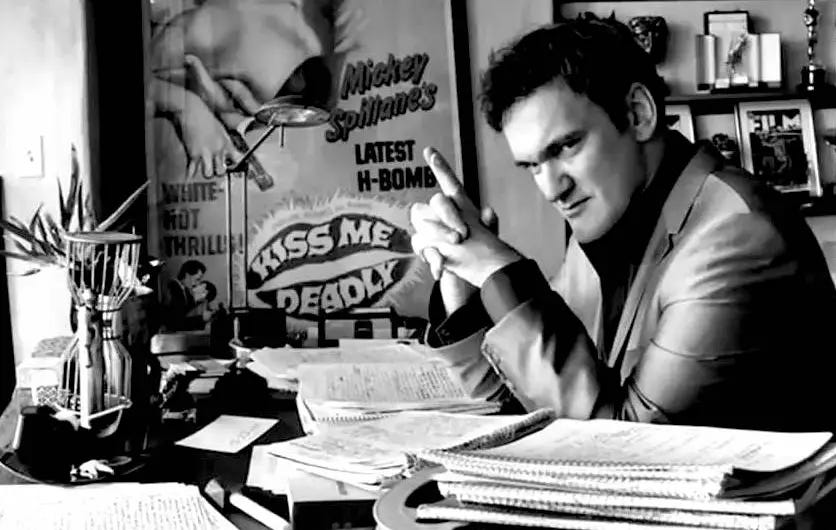
Quentin Tarantino followed this creative routine while writing Inglourious Basterds: Start around 10:30. Write till 6. Then hit the pool. Hanging out in the pool, ideas started showing up. His mind wandered. He’d think critically about the day’s work, then climb out and jotted down notes for tomorrow. The same principle applies when you’re stuck on a puzzle. You walk away, come back, and suddenly see the solution. You had to forget the wrong approach first. That’s what stepping away does. It helps you forget the dead ends.
Jihae Shin and Adam Grant studied how procrastination helps creativity. Seems backwards, right? Procrastination kills performance. How could it help? When you only execute, you rush in. You’re in operational mode. But when you let yourself get distracted (not hours of TikTok, but genuine mental breaks) you might spot unconventional paths. There’s a sweet spot. Moderate procrastinators are 40% more creative than people who never procrastinate, and 33% more creative than chronic procrastinators. Taking time to think, switching contexts, seeing new angles. But creativity isn’t magic. You still need persistence, resilience, and passion. Without those, you never ship.
Here’s what this means for your team: ideas aren’t lightning bolts, despite what Bart believed. Teams building innovative products need to generate and test many ideas. They need to persist beyond what feels productive. And they need to switch focus regularly to refresh their perspective and escape dead ends.
Creativity takes time. Your team’s ideas need to go both deep and wide.