

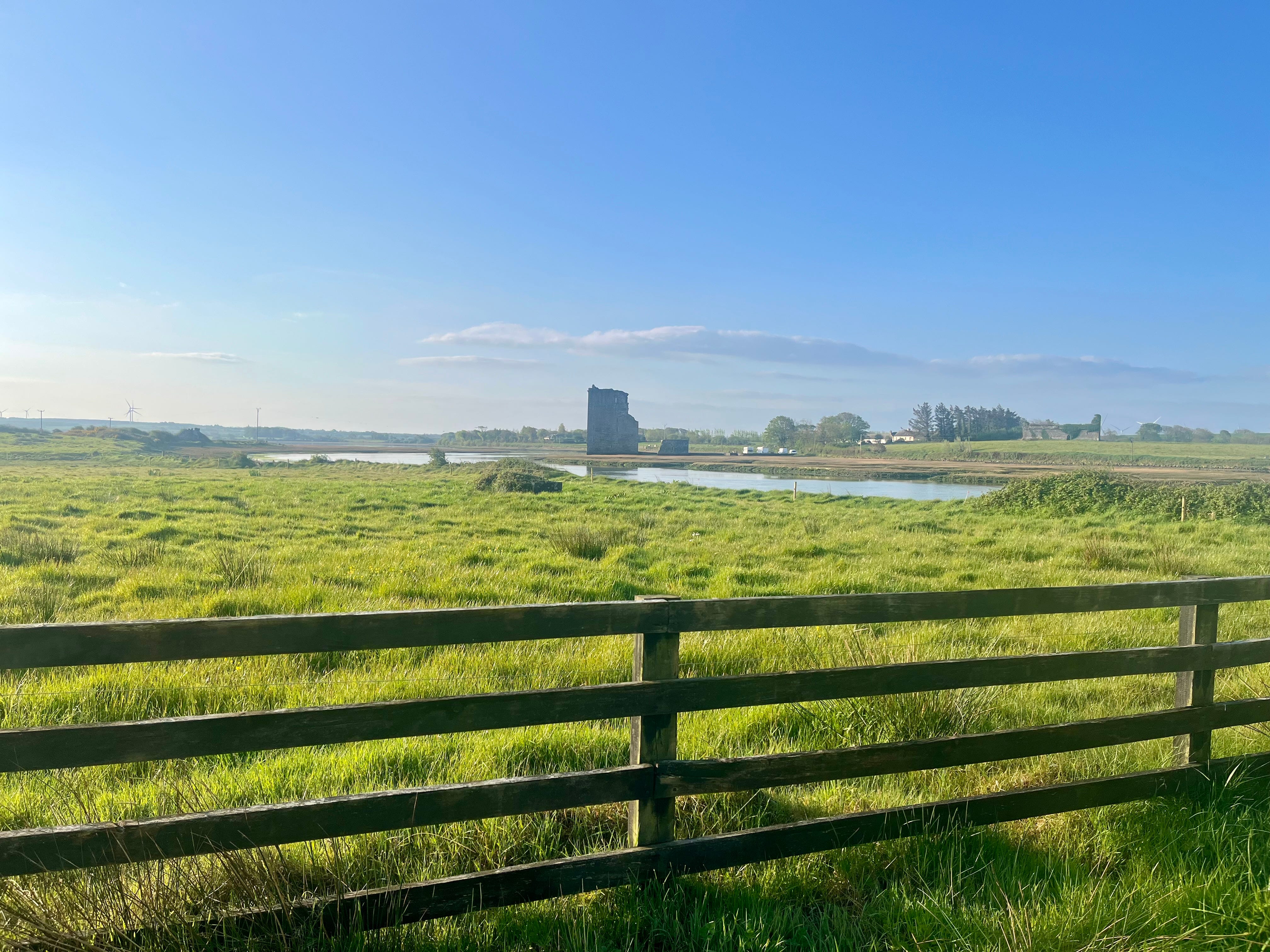
The sun came through the window. I woke up around seven o’clock. My kids and wife were still sleeping, which is unusual for this hour. It was the holiday vibes, I guess. I looked out of the window and saw a castle ruin on the opposite side of the lake. The sky was blue with a few clouds, and the lake was mirroring the green shores and the castle tower. It was a beautiful morning on the west coast of Ireland.
It was the sixth day of our road trip. We drove, found a place to stay in the afternoon, stayed overnight, and hit the road again. That night we found a lovely bed & breakfast by Carrigafoyle Castle. The view from the window, Celtic music in the background, a pair of lamas behind a fence. It wasn’t just the beautiful nature, but also the culture. Ireland, being a relatively small country at the periphery of Europe, has an edge in creative culture.
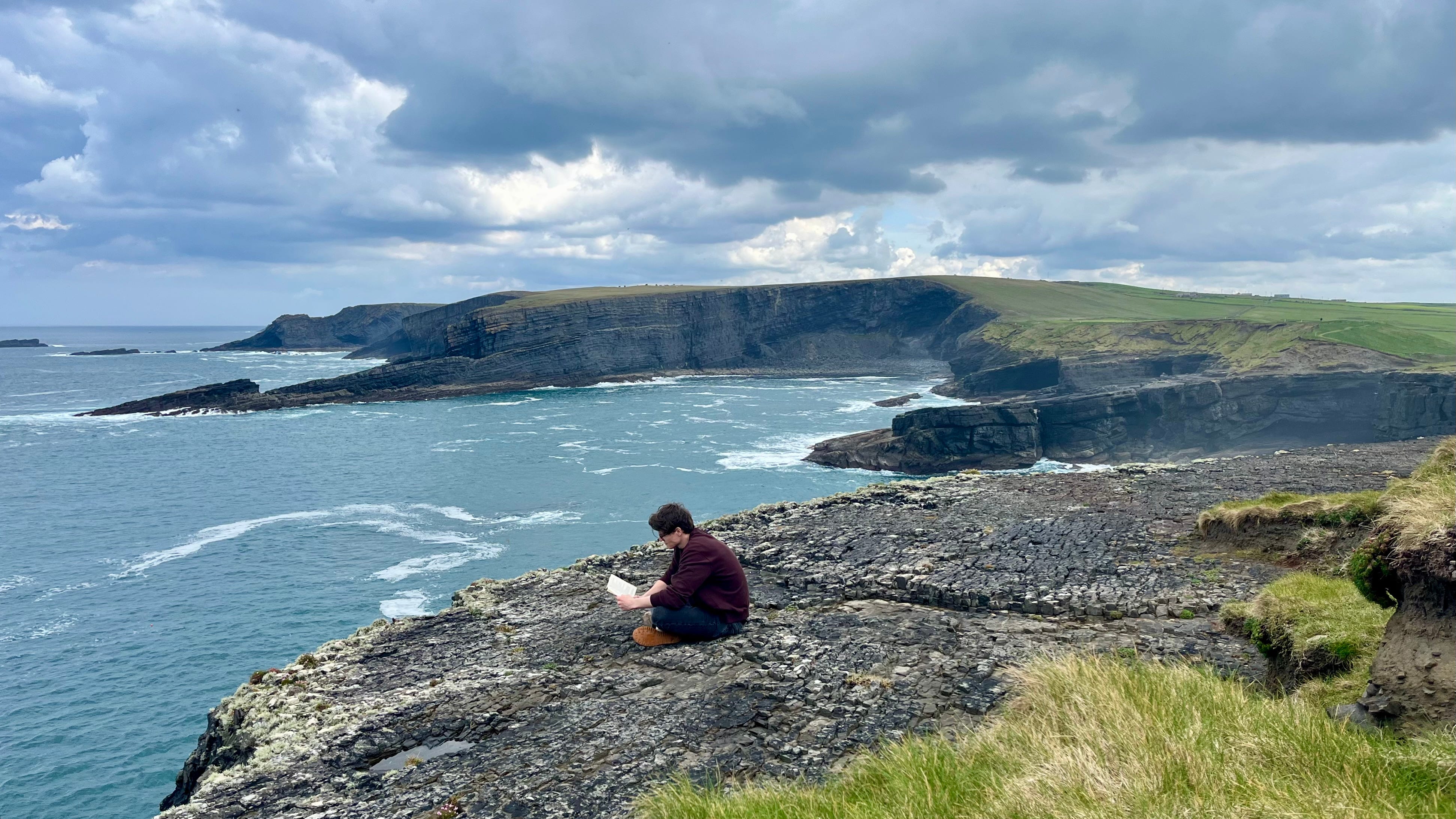
With the population only five million, Ireland gave the world writers, actors, musicians, influenced cuisine and lifestyle of many more people. Samuel Beckett or James Joyce in literature. U2 or The Cranberries in music. Cillian Murphy or Colin Ferrell in acting.
How come the cultural impact is so distinct? Why is it that the country is so creative relative to its population?
The more I was thinking about that, the more I began to realize the same is true for any creative endeavor. Country, business, personal. So… what did Ireland do differently?
Constraints
Before we landed in Dublin, we were expecting different vibes. “You’re gonna love the city, it’s so beautiful,” people said. I don’t know why but I thought it would be somewhat similar to British cities. I mean… It would make sense, right? The two countries are right next to each other, they share big parts of history, they speak the same language. Look closer and you see they are very different.
If the two countries were restaurants, the UK would be fine dining and Ireland would be a pub.
Great Britain effectively ruled over Ireland for over a century. Irish people were second class citizens within the monarchy. They had formal representation in the British government but it was exactly as I said… just formal. It was the poorer periphery of a prospering kingdom. Everything escalated with the Great Famine in the mid-19th century when over two million people fled the country and around one million died of hunger.
The unrest of the unsettling century made it clear the people couldn’t make it through economic power. They didn’t control the country nor could they easily produce and export new products. Art became their refuge. Shortly after the Great Famine, Oscar Wilde was born in Dublin. Then, later James Joyce or Samuel Beckett. Those authors transformed the national trauma into relatable characters and witty stories about search for identity and belonging when exiling far from home. Readers fell in love with the profundity.
Irish people prove that constraints are in fact an enabler. Limits force us to try new ways which we wouldn’t otherwise think of. Ireland succeeded in the arts because they occupied a unique position. Part of the English-speaking world but never really at the center of it. Intimacy, the “smallness” of life’s experience, was combined with the breadth of the audience they could reach. Being cultural outsiders made them legends.
Connection
Countless times during the trip, I had chats that surprised me. A lady working on a gas station helped with the coffee machine or a random guy asked whether you wanted to take a picture because he saw you having a nice picnic with a family in a park. They would crack jokes and wouldn’t stick to transactional core for the conversation but rather showed actual interest in you.
As the country’s history unfolded, Ireland either didn’t have a formal government or another power governed the land. For the most part there was no such thing as an official narrative. Societies work like big organisms because they share the same values. Often grounded in religion. Those values are enforced by law. But if you remove the authority… Values seek another place to go.
Irish stories spread orally. In social gatherings. In pubs. People preserved their culture over centuries by simply sharing it over a pint or good meal. Writers iterated on their stories with their peers. Musicians played in countless pubs and bars to test the audience’s response to their new songs. It reveals something crucial about creativity: it must be grounded in the reality of the lived experience of the audience.
Irish artists were bouncing ideas off of their “test audience.” And it helped them in two ways: they got feedback and they spread the ideas.
C.S. Lewis, born in Belfast, brought the Irish storytelling habits to British literature. Together with J.R.R.Tolkien and a few other writers, they met every Tuesday in an Oxford pub called The Eagle and Child. They sat around a table in the corner and discussed their work. This unofficial club was called the Inklings. And because they were willing to socialize their ideas, they gave the world the beautiful stories of The Lord of the Rings and The Chronicles of Narnia.
Irish creators understood that you must socialize ideas early. Talk about your work. Show it to the people. Then, continue working, incorporating their feedback. The audience didn’t control the work. But listening to the audience made it better.
Courage
Once during breakfast, an older lady approached me. She asked about my kids and we started chatting. Coming from New York state, she came to Europe for a few-month-long road trip. It turned out she had Irish ancestry. And she was very proud of that.
Ireland reminds me of the United States. It’s no coincidence. Do you remember the famine in the mid-nineteenth century and two millions of Irish people fleeing the country? Around a million ended up in America. Seeking new lives, they settled in the United States. But they didn’t just escape. They brought their heritage and they came to build.
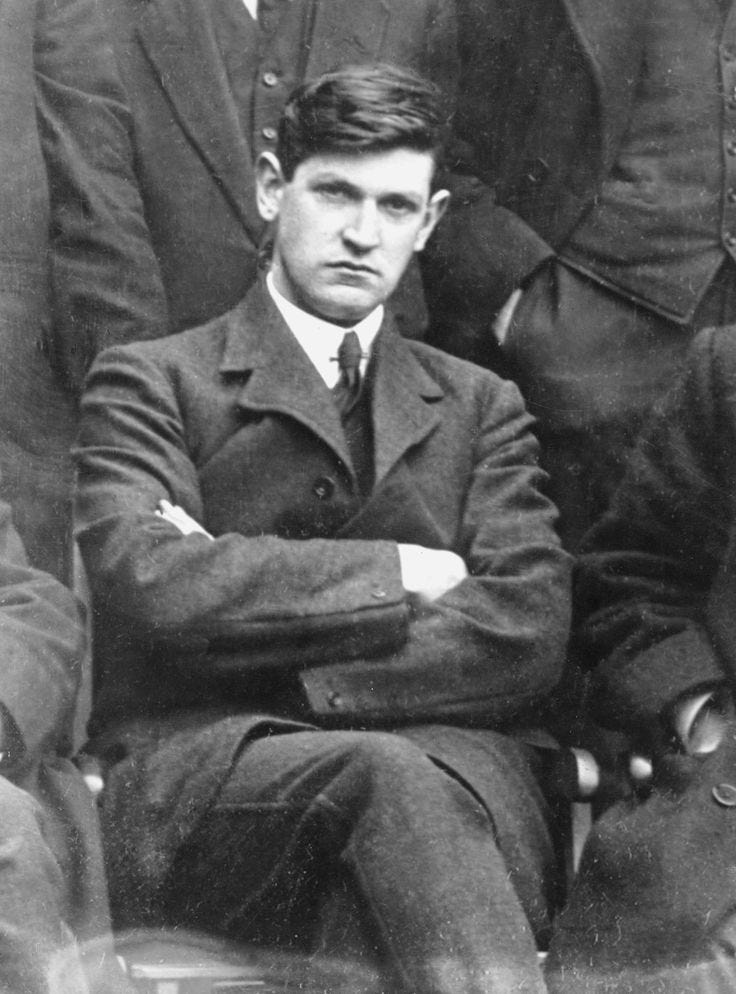
Half a century after the famine, a young man named Michael Collins helped to change the course of the country. He started as a revolutionary and soldier who played a key role in the establishment of the Irish state in the 1920s. He had the courage to stand up for what he believed in, but he was not just a protest voice.
When the separation from the United Kingdom was actually taking place, Collins stepped into politics and became deeply involved in negotiating the treaty itself. And politics, unlike revolution, is about compromise. Part of that compromise was the separation of Northern Ireland from the rest of Ireland.
That decision turned him into a black sheep among many of his own people.
He was eventually shot at the age of 31, but what makes him such an important figure is not only that he stood against the system. It is that he had the courage to do what many activists never do: help build a new system, even at the expense of his own reputation and ultimately his life.
The old lady’s ancestors left the country, built new life in the United States, and made her proud of her heritage. I feel like there was a piece of Collins in her ancestors as well. They had the courage to cross the ocean and didn’t do it with their head bowed down. They had the courage to leave, but they also had the courage to create. Somewhere I’ve heard someone describe this trait as being a “fuck-off guy.” Impossible to intimidate. That edge, that willingness to stand alone, feels deeply Irish to me.
…
Irish people struggled through years of occupation, wars, social unrest, and millions of people fleeing the country. You would expect a traumatized and broken nation. Instead, whenever you hear Celtic music or recognize elements of it in modern music, you immediately know where it comes from. When you read Irish authors, you identify with the urge to self-identify, living far from home.
Years ago, I was sitting on the floor of my apartment in Prague, getting ready for an investor pitch I had the next day. I was nervous. But I knew I wanted to build, not just… be. Finding a way around my own limits and surrounding myself with the right team, I pulled it off. Was it a great success? Not really. But I learned a ton about myself and what it takes to be creative. Because long before I came to Ireland, I wanted to find Michael Collins. I wanted to stand alone, but also build something. I wanted to be the fuck-off guy.